Where others see land, we see possibility. Our work is to examine that possibility carefully, explain the tradeoffs and help you choose a practical way forward.
Start with your property, priorities and the choice in front of you. A useful engagement answers a real question: buy, sell, study, rezone, design, partner or pause.
What you leave withAn agreed question, scope, fee and schedule.
Connect parcel records, zoning, land-use policy, overlays and existing approvals. Identify apparent physical constraints and the information that still needs staff or specialist confirmation.
What you leave withA clear explanation of what applies to your land, with sources and questions to resolve.
Consider realistic uses and test the preferred program against market, cost, timing and approval assumptions. We explain what could change the recommendation.
What you leave withAn options comparison or scoped feasibility review.
Bring the right professionals into the work. Organize application milestones, hearing preparation, owner decisions and the conditions attached to an approval.
What you leave withA list of next actions, who is responsible and when you need to decide.
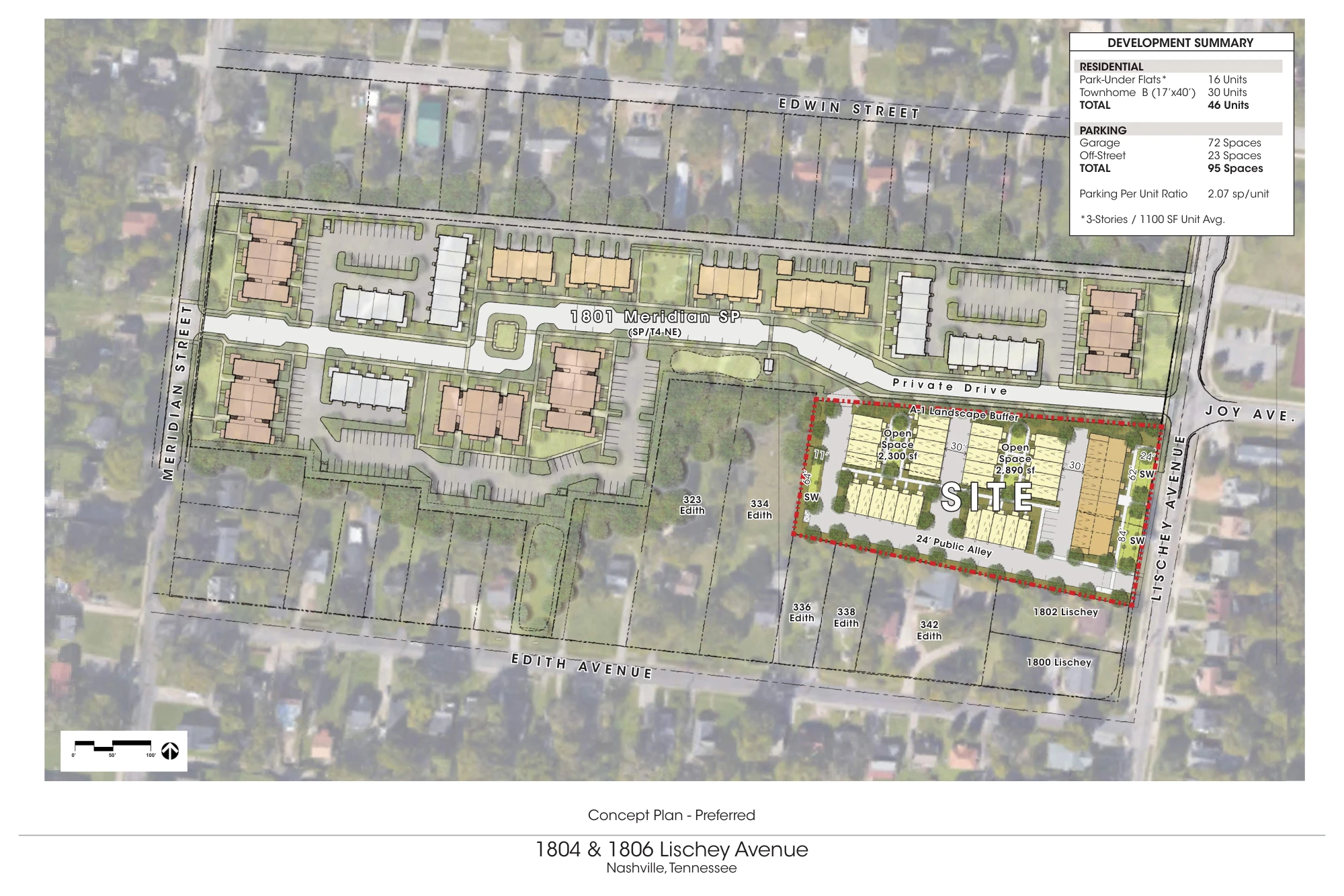
The Lischey story brings together parcel studies, a development concept, Jessica’s public presentation and an adopted zoning ordinance. Each record tells a different part of the project’s progress.
Original 46-unit concept study from the project archive. A concept plan is distinct from final construction.
WHAT WORKING TOGETHER LOOKS LIKE
Clear at the beginning. Accountable throughout.
Your priorities lead.
A family property, an investment site and a church campus may call for different answers. We begin with what you need to retain, create or accomplish.
The evidence stays visible.
Reports distinguish source records, assumptions and open questions. A useful recommendation may be to proceed, revise, investigate further or pause.
You know what needs a decision.
For ongoing work, updates identify progress, upcoming milestones, changes and decisions needed from you. Scope, reporting frequency and responsibilities belong in writing.
The community has a voice.
We listen early, document concerns and explain the proposal clearly. Respectful participation is part of the work, whether we support an owner or help a neighbor understand a project.
FORWARD THINKING. GROUNDED IN THE RECORD.
Modern tools. Human judgment.
Mapping systems, digital records and AI-assisted organization help us connect information and prepare the work. Findings still need source checks, local context and the right professional judgment. A map is a research tool; it does not replace a survey or an approval.
Send an inquiry, discuss the right scope and agree on the work before it begins. Zelle is preferred; Jessica provides the correct payment details directly. A request, an agreed fee and a cleared payment are separate steps.